General

The lost interview

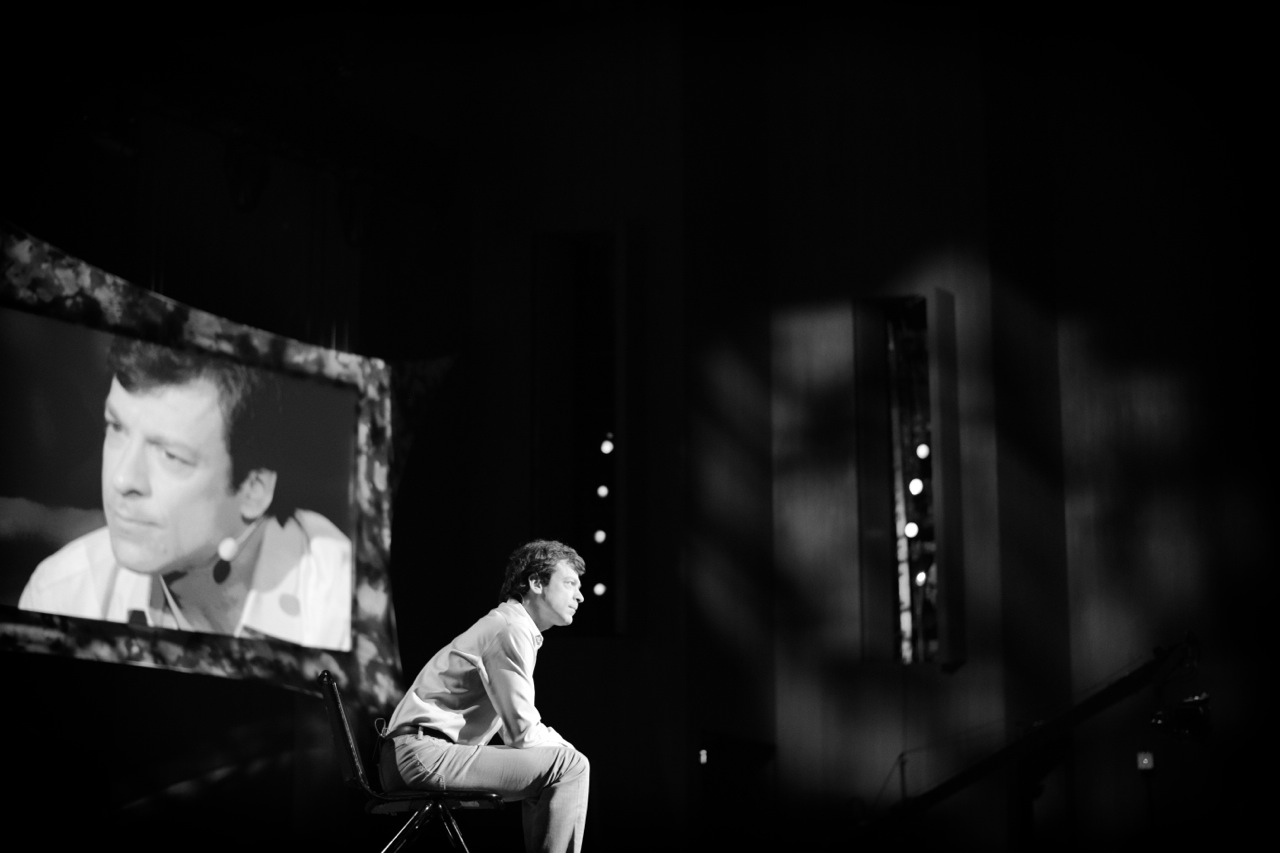
I went to the theater to see this lost interview with Steve Jobs from 1995 that was originally shot for Triumph of the Nerds and came away from it inspired. Because what other executive in Silicon Valley would ever cite Picasso and Thoreau? And that he did makes me believe that, perhaps, there’s a place in the Valley for someone like me.
EXCLUSIVE: Steve Jobs ‘The Lost Interview’ Teaser – YouTube

Share/Save/Bookmark

Jeff Sachs on Occupy Wall Street

Activists are needed among shareholders, consumers and students to hold corporations and politicians to account. Shareholders, for example, should pressure companies to get out of politics. Consumers should take their money and purchasing power away from companies that confuse business and political power. The whole range of other actions — shareholder and consumer activism, policy formulation, and running of candidates — will not happen in the park.

The new movement also needs to build a public policy platform. The American people have it absolutely right on the three main points of a new agenda. To put it simply: tax the rich, end the wars and restore honest and effective government for all.

The New Progressive Movement – NYTimes.com

Share/Save/Bookmark

My favorite things of 2010


At the end of 2009 I put together a quick list of things I liked from the year. Earlier in December some friends asked if I would be making a similar list this year. And indeed, I have made one, and it is more ambitious than last year’s in its scope, volume, and design. Check it out here.

Inevitably, there are some things that I would like to mention that I liked during the year but, for one reason or another, didn’t quite make the list. Here are the honorable mentions:

Henri Cartier-Bresson at the MoMA — I’ve only gotten a quick preview of this show, but it’s very promising, and I can’t wait to take the time to really take it in. Without Bresson, the sort of photography I practice wouldn’t even be possible, so I’m looking forward to the chance to see so many of his prints in person.

Audrey Tautou — I love her acting, her films, her style, and the fact that she uses a Leica to photograph people she meets.

Difficulty — This one really should have been on the list, but I chose to write it into a couple other entries. I feel like we’ve become less and less patient when it comes to difficult things—people, art, technology, and work. But one of the things I learned in my life as a reader is that difficulty often conceals great value. And that’s something I remembered in 2010. Difficulty is something to engage with, not run away from, because the rewards for doing so can be so great. It’s closely related to insistent compassion and creating possibilities, which both made the list. You can find someone difficult to know and just throw your hands up and walk away or you can insistently try to know them because, perhaps, their worth will justify their difficulty. You can leave Gaddis and Proust and Foster Wallace and Pynchon on the shelf because their books are too long and confusing or you can take the time to read them and, perhaps, find yourself changed. And, ah ha, wouldn’t that be worth any level of difficulty?

Yanidel — The street photographer Yanick Delafoge calls himself Yanidel, and his post-processing techniques produce a look that it utterly unique and European and brilliant. I especially enjoy his photographs from Paris.

Cosi on rue de Seine in Paris — In April I returned here for the first time in nearly nine years. It still serves the best sandwiches in the world.

Ken Griffey, Jr. — He was the hottest minor league prospect in baseball at the time when I really became fanatical about the sport, and I followed his entire career until it ended this summer. His swing was beautiful, and he should go down as the greatest player of his generation. I got to see him play in the 2007 All-Star game when he started in the same outfield as Barry Bonds in San Francisco, something I’ll never forget.

Subjective Time — This is the simple but not often cited concept of how we experience time subjectively in relation to our age. It’s no secret that time seems to pass faster as we get older, but it’s not commonly known that this concept has been scientifically studied and verified. In fact, there’s even an equation that describes one’s perception of time based on her age. Given current average life expectancies in the Unites States, we feel like we’ve lived half of our lives before the age of 20. Twenty is the subjective halfway point of our lives. It’s no wonder that it seems like such a formative age!

Concord, Massachusetts — Walden Pond, Mount Misery, Sleepy Hollow, and ridiculously large servings of ice cream—and only a 30-minute drive from Cambridge!

Love and Its Opposite by Tracey Thorn — That no one else writes songs about the disappointments of middle age makes this a unique album. That Tracey Thorn does so with brilliance and nuance makes it spectacular.

Printing Photos — So much better than storing them in the “cloud.”

Generation Why? by Zadie Smith — This is one of the better things that has been written about online culture, i.e. what the Internet has done to our culture.

J.D. Salinger — Don’t ever tell anybody anything. If you do, you start missing everybody.

Don’t forget to read the final list. Click on the images to reveal the descriptions. And click on the Away arrow to open the page for a random favorite.

Share/Save/Bookmark

My year in photos

This was the first year of my life that I documented more with my photography than with my writing, especially if that whole picture = 1,000 words equation is true. Here are some of the things I saw in 2010, arranged, more or less, chronologically. For those of you who are curious about gear, I took most of the shots with a Leica M7, Leica M8, or Panasonic GF1.

Share/Save/Bookmark

Using HDR Efex Pro for the first time

I use Nik’s Color Efex Pro and Silver Efex Pro quite a bit for post processing my photos, so I felt compelled to try out their new HDR software. Unfortunately, I don’t have exposure-bracketed shots that I took with the intention of making an HDR image. So, I took a couple photos I had from a hike to Mount Misery last month and put them into HDR Efex to see what it could make of them. The conditions under which I shot these photos were not ideal—I handheld them and took my rangefinder camera away from my eye to adjust the shutter speed in between shots—but the result from only two shots is not disappointing. See below for the HDR image and the original two photos that HDR Efex combined to make it.


Share/Save/Bookmark

Because the Night

All these years, I’ve assumed that Patti Smith wrote “Because the Night”—that is, until I was listening to Springsteen’s The Promise, yesterday. It turns out that Bruce started writing the song, and Smith finished it.


Share/Save/Bookmark

NLCS Notes: Why did Jimmy Rollins not steal second last night?

When Brian Wilson struck out Ryan Howard to end the sixth and final game of the NLCS last night, I immediately thought of Carlos Beltran’s looking K against the Cardinals to end Game 7 of the 2006 NLCS and the question that Phillies fans will be asking all offseason, “Why didn’t he swing?” Others have made the same remark in the press.

However, just as puzzling to be was the Phillies failure to give Jimmy Rollins the chance to steal second base in the ninth last night. When Kevin Millar of the Red Sox walked in the ninth inning of Game 4 of the ALCS with his team facing elimination against the Yankees, the Sox put Dave Roberts into the game as a pinch runner. As reiterated in Ken Burns’ recent Tenth Inning, everyone at Fenway knew that Roberts was going to steal second. And after three pickoff attempts by Mariano Rivera, he did. The rest, of course, is history. Rollins reached base in a nearly identical situation last night, and I was certain that he would attempt to steal second. And yet he didn’t. Granted, the Phillies did eventually get a runner to second base in the inning, but that didn’t happen until there were two outs when Howard walked to the plate and back to the dugout after having watched strike three graze the outside corner.

Some other, brief notes from last night’s game:

  • Opposing second baseman have had a very tough time in the field against the Giants this postseason. Will Ian Kinsler fare any better?
  • The benches cleared last night because Jonathan Sanchez and Chase Utley have a history. Joe Buck didn’t not mention that until much later in the game after his producer alerted him.
  • Tim Lincecum’s appearance had me worried not so much for the Giants, but for his arm and the future of his career. Fortunately, he didn’t last long. We’ll see how he fares on Wednesday’s Game 1 against Texas after five days of rest, excepting yesterday’s appearance.
  • Roy Oswalt threw back-to-back pitches at 67 mph and 94 mph—that’s an incredible 27 mph speed differential, and he was frequently in the 20-24 mph differential range.
  • Keep in mind that Sanchez was removed from the game after the fight in the third inning. He was not ejected or injured. I don’t think I’ve ever seen a pitcher knocked out of the game in the second of a game that ended with his team winning 3-2. For all the troubles the Giants’ bullpen has had this postseason, they really came through yesterday. Granted, it was one of their starters, Madison Bumgarner, pitching on short rest, who got them through some critical innings in the middle of the game.
  • This is an interview with Giants’ closer Brian Wilson, and this is Rangers’ pitcher C.J. Wilson’s Twitter feed.
  • Do players bring their own ski goggles for post-game celebrations? Or does the team purchase a huge lot of them that are just sitting on a table when they enter the locker room?

Share/Save/Bookmark

Songs from childhood

I’ve been listening a lot to Arcade Fire’s record The Suburbs this weekend, and I’m reminded of Flannery O’Connor’s line that seems entirely applicable to the Canadian band: “Anybody who has survived his childhood has enough information about life to last him the rest of his days.” Whoever picked one of their songs for the Where the Wild Things Are trailer could not have done better.

Share/Save/Bookmark

The great review of Great House

Rebecca Goldstein reviews Great House in today’s New York Times Book Review.

What gives the quickening of life to this elegiac novel and takes the place of the unlikely laughter of “The History of Love”? The feat is achieved through exquisitely chosen sensory details that reverberate with emotional intensity. So, for example, here is George Weisz describing how, when his clients speak of their lives before the war, “between their words I see the way the light fell across the wooden floor. . . . I see his mother’s legs move about the kitchen, and the crumbs the housekeeper’s broom missed.” Those crumbs are an artist’s true touch. They demonstrate how Krauss is able, despite the formidable remove of the central characters and the mournfulness of their telling, to ground “Great House” in the shock of immediacy.

Share/Save/Bookmark

40mm Leica Summicron-C: The best cheap Leica lens

Steve Huff recently posted his choice for the best budget Leica lens, the 35mm f/2.5 Summarit-M. It’s the second least expensive lens in Leica’s current lineup, and I agree that it’s the best bargain new M-mount lens you can get from Leica.1 However, one of the great things about shooting Leica is that there’s a robust secondary market for lenses. And for the price of a new 35mm Summarit, you can purchase a faster f/2.0 used 35mm or 50mm Summicron. You can even get the pre-ASPH version of the 35mm lens that people refer to as the “Bokeh King.” In fact, there are several used Leica lenses you can purchase for the same cost of or less  than a brand new Summarit.

My favorite, and what I believe to be the best bargain lens for any camera system is the 40mm f/2.0 Leica Summicron-C. This lens was made for the Leica CL, and you can get used copies for $250-$400 depending on condition. (Note that the 40mm Minolta Rokkor-M is, essentially, the same lens with its own nickname, the “water lens.”) However, it will, contrary to what you might hear, work on any modern M-mount body. It renders very much like the 35mm Summicron but can be had for about 75% less. Put it on an M8, and it effectively becomes a 50mm lens with the 1.33x crop factor. The only problem is that most M bodies do not have 40mm framelines. However, it’s simple to modify the 40mm lens to bring up the 35mm framelines, which are more accurate and even precisely so on the original M8.

Moreover, the 40mm is probably the lightest, smallest lens Leica has made in the past 40 years. Mounted on a camera body, it makes for a very small, perfect package. The filter size is a little odd; a modern 39mm filter won’t screw all the way in, but it attaches well enough, and I’ve never had any problems with my filter coming loose or falling out. Finally, this lens works quite well as a portrait lens with the 2x crop factor of the Micro Four-Thirds system. If you’re looking to purchase a copy, check eBay and KEH. They both often have these lenses available, though you may pay a premium on KEH.

Here are some sample photos from the 40mm Summicron-C.

  1. The company’s least expensive new lens, the 50mm Summarit-M doesn’t quite render as nicely as the 35mm version from this line. However, it’s still a bargain, and you find find used copies of the 50mm Summarit for as low as $600 on eBay.

Share/Save/Bookmark

Against metrics, for art

Jed Perl’s piece in The New Republic is too short, but makes all the right points about why the arts matter and why being interested in things you know nothing about matters. It also reminded me of how so much media, so much of the online world assumes that its audience is stupid and incapable of handling or enjoying difficulty.

Share/Save/Bookmark

Rediscovering film with the Leica M7


Six years ago I gave up shooting film entirely and made my transition to digital photography complete. In the process, I moved from an SLR with nice lenses to a series of point-and-shoots whose convenience, I thought, compensated for their subpar image quality. Eventually, I gave those cameras up and moved on to more robust digital cameras…a couple of which have inspired me quite a bit. So last week when I had the chance to shoot a couple rolls of film with a Leica M7, I wasn’t expecting much, having not shot any film since 2004.

I took the camera to cocktail night at the Ferry Building in San Francisco, a fun event where admission gets you unlimited drinks and appetizers from some of the best bartenders and chefs in San Francisco. This is the organization that puts on the event, and I encourage everyone to attend, if they do another one.

Before I could go or shoot anything, I had to load up the film, which is quite easy. Some people complain about it being more difficult than it is in other cameras with a rear door that flips out. Perhaps, this matters for critical jobs where you need to reload film very, very quickly, but it didn’t bother me at all, nor did I find loading the film slow in any way. I’ll have a video of the process up later.

A few years ago in the New Yorker, Anthony Lane described the sound of a Leica shutter as a seductive kiss. I had never handled a film Leica M series camera before last week, and I have to say that Lane’s ostensibly cheesy observation is dead-on. After I loaded my first roll of Kodak Portra 400VC in the camera and advanced it a couple frames, I thought there was something wrong with the shutter. “Why isn’t it making more noise?” I asked myself. Seduction begins with a little mystery, I suppose.

Handling the camera was great, especially with one of Gordy’s wrist straps. It just feels absolutely right when you’re holding it. And I had mounted on it my favorite lens of all time, Leica’s 50mm f/2.0 Summicron. To test it out before going to the Ferry Building, I took it to Elite Sports soccer store on Haight, where Boone and I watched Spain defeat Germany in the World Cup.

One of the great things about the Leica M cameras is that you can shoot them at very low shutter speeds—even with the 50mm lens, I can reliably get shots as slow as 1/10 second. It’s like having a faster lens or better high ISO performance or just, generally, an extra stop! This comes in quite useful indoors where light is usually low. With the exception of the first shot below on the street, I don’t think any of these were taken at speeds above 1/50 of a second. Normally, on an SLR with a 50mm lens mounted, that would be the minimum shutter speed that someone could expect to use—here, it was my maximum shutter speed.

Another thing I like about the M7 is the viewfinder. It’s bright and the focusing patch is fairly easy to align in most conditions. The camera I was using had a viewfinder with 0.72x magnification. As I don’t find much use for wide angle lenses, I think a 0.85x viewfinder would suit me even better.1

Looking through the viewfinder, I was able to wait until I saw something I wanted to photograph, whether it was someone walking through the frame or an already framed subject looking towards the camera or smiling. The viewfinder is easily the brightest on any camera I’ve ever used, so I feel like my perspective on a given scene is not particularly compromised even though I’m looking through it. Conversely, when I’m looking through an SLR’s viewfinder, I feel less a part of my surroundings. When I’m looking at a liveview LCD viewfinder on the back of a digital camera, I feel like I’m somehow watching a cropped, delayed, and pixelated version of what’s really happening in front of me. Not so with the M7.

Because I was shooting film—expensive film that would need to be developed at additional cost—I was patient waiting for shots I was anticipating. I tried to avoid wasting a single frame, although I inevitably did because of user error, though not user intent. I spent more time thinking about what I was doing rather than blindly snapping away.2

The big advantage of the M7 over other M series cameras is that it has an aperture priority mode. I found this quite useful, as I could focus my concentration on controlling the depth of field and framing of my shots. Some Leica purists eschew the aperture priority mode, but I think it’s a nice convenience. Not using it or overriding it is easy on the M7, which has Leica’s traditional shutter speed dial.

Shooting, with a Leica, as many others have noted, makes you slow down. It makes you more careful about composition and exposure. And shooting with film compounds those effects. In general, I’ve spent the past few months trying to regain two abilities I feel I’ve lost in the Internet age—that to be patient—to delay gratification—and that to concentrate on something for an extended period of time.

Digital photography conditions us to expect instant gratification, providing us with instant previews of our images. In some cases, this is useful and helps us get the shot we wanted. However, more often it’s simply a distraction from doing the thing we should be focused on—taking photographs. Is there any other activity in which people so immediately evaluate their performance with such scrutiny as photographers checking the LCD image previews on their cameras? It’s like watching an instant replay of yourself walking down the street. Perhaps, it’s useful if you’re, say, recovering from an injury, but, probably, it will just make you miss the door that’s about to open right in your face.

When I had the M7, all I was thinking about was taking pictures. I was fully engaged with the process because it’s all the M7 could do. I couldn’t change the ISO or the saturation or the scene mode, and I definitely couldn’t review my images. How difficult it has become to engage so fully with an activity, to limit yourself thus! And yet, who would disagree that doing so is more valuable and memorable than not?

Moreover, the M7 makes this process entirely pleasurable. It’s small enough to take anywhere, and, combined with one of Gordy’s wrist straps, can stay in your hand for hours at a time, unlike an SLR. It feels like a well-made object because it is one. Everything from focusing the lens to advancing the film and releasing the shutter feels completely, wonderfully satisfying in a way that no other camera I’ve used before does. The shutter is the quietest I’ve heard. Approach a scene, lift the camera to your eye, focus, frame, kiss.

It isn’t just the process that blew me away; the results were awesome. I waited with anticipation for the local lab to develop and print my film. What would it look like? What surprises lay in store? I can say that I felt my patience was rewarded. Even though their content is boring, the prints I got back from the lab had a contrast and vividness that makes them look not only unlike digital images, but cinematic in a way that I absolutely love—rich, textured, almost tactile. Unfortunately, getting to that result means paying a lab for developing and printing, which is why I don’t think I can shoot exclusively on film. My digital color management and workflow isn’t quite yet at the point where I can use film scans to produce prints that are as good as those I received from the lab.

Despite the costs, the joy I had shooting with the M7 and the cinematic quality of the prints I got from the roll of Portra have convinced me that film still has a place in my photography. Now to find a suitable M-mount body for myself—3


Here are some images I scanned with my Nikon CoolScan. Unfortunately, this line of film scanners from Nikon is no longer available, and prices on the secondary market are high. My friend CK over at 39 East Photography uses the Epson V700, which he highly recommends and which can can larger batches of negative strips than the Nikon, saving you time. And we all know that time is money.

Next time I’ll share my thoughts on the Leica S2, which I was able to borrow from Leica for a weekend when I was in France earlier this year.

Here’s Lori waiting for the bus to go downtown.

Boone and Eric at cocktail night. The print of this image had a very cinematic feel to it, which I liked.

Boone at home.

I even liked the images that showed more of the film grain.

This bruschetta was very good.

Some of the drinks contained odd ingredients, such as sausage, beef stock, mango, and sandwiches!

This man sat next to me to watch the Spain vs. Germany game at the soccer store on Haight.

This boy watches his team get dismissed from the World Cup moments after his mom had purchased a Germany soccer jersey for him.

I even shot a roll of Kodak Tri-X, and made this print in the darkroom. Unfortunately, I was too lazy to do the work necessary to make a more contrasty print.

One final image of the M7.

  1. I tried out someone’s M3 last weekend. It has a 0.92x viewfinder, which means that things appear nearly life-sized when you look through it. That would be perfect for shooting 50mm lenses.
  2. Okay, I admit I took one shot from the hip. It didn’t work out so well, and knowing the odds that that would be the case, I regretted it almost immediately.
  3. The Zeiss Ikon and the Leica M6 both seem like viable options.

Share/Save/Bookmark

How to show invisible files in Mac OS X

If you ever need to view invisible files in the Finder, open the Terminal application, type the following, and hit enter. If you want to hide invisible files again, repeat the process and change YES to NO.

defaults write com.apple.Finder AppleShowAllFiles YES


Share/Save/Bookmark

Barriers to entry and start-ups

I’ve sat through more start-up pitches than I would like to admit over the past two years, and there’s one question that invariably comes up during every one: “What are the barriers to entry?” In other words, What will prevent someone else from doing exactly what you’re doing? It sounds great, right? Like, barriers to entry should be a good thing that every business should strive for. The problem is that the entire concept is premised on businesses operating in a monopoly environment. What people are really asking is, “Will you have a monopoly over your market?” And we all know monopolies are bad, right?

Look at industries with high barriers to entry and compare their stocks with those of other industries. You’ll find that those industries with high barriers to entry—automobiles, airlines, pharmaceuticals—have consistently underperformed the American stock market as a whole in recent times. Compare these industries with Internet businesses, which have fairly low barriers to entry. Could it be because the absence of barriers to entry drives competition, which drives innovation, which drives growth, which drives—well, you get the idea.

If you’re evaluating a business with high barriers to entry, you can almost assume that it’s doing to be slow, boring, and not particularly innovative. Fortunately, what many venture capitalists mean when they ask about barriers to entry is, “Do you have a patent?”

Let’s take Apple and the iPhone as an example here. The iPhone has been successful because Apple did something better than anyone else. They weren’t the first to make a smartphone or to make a phone with downloadable apps or email or maps. They just did it better. That Apple holds patents for things like multi-touch doesn’t mean that HTC and other companies can’t make smart/app phones. It doesn’t mean that they can’t design a new category of personal communication device that’s even more compelling and desirable to consumers than the iPhone. In fact, it suggests the very opposite—that to compete with the iPhone, you’ll need to make something better. This is not a barrier to entry, it’s an invitation to innovate.

Share/Save/Bookmark

Twitter Weekly Updates for 2010-06-12

Share/Save/Bookmark

Too much Sex (and the City): a review of SATC2 featuring Susan Sontag

There are many cringe-inducing moments in the second Sex and the City film—the poor jokes, the cheap moralizing, Samantha waving around condoms and giving the finger to an angry mob of locals in Abu Dhabi—but the one that really got me came at the very end of the film when Carrie places her latest book—its subject is marriage, and the New Yorker pans it complete with a cartoon drawing of Carrie Bradshaw—on a shelf next to Susan Sontag’s Against Interpretation in her apartment. It’s the same Picador paperback edition of the Sontag book hat I purchased when I was fresh out of college and living in New York. It’s an excellent collection with two very well-known essays, the first of which I’ll mention is “Notes on Camp.” The appearance of the Sontag volume finalized what was already obvious: SATC2 went too far—it was Camp that acknowledged itself as such, it went beyond Camp so as to be meaningless.

Sontag’s most famous lines on Camp: “the essence of Camp is its love of the unnatural: of artifice and exaggeration” and “The ultimate Camp statement: it’s good because it’s awful.” The HBO series of SATC always had some qualities of Camp about it. The characters, while developed over time, remain, with the possible exception of Carrie, archetypes. The jokes and situations were often clichéd and predictable. But the show always had what Sontag considers an essential quality of true Camp: it was dead serious. And that it maintained that seriousness throughout six seasons is what allowed audiences to love it unequivocally, to feel connected to and care about the characters.

I confess to the potentially unforgivable sin of being a straight, white male who fell for the show. I appreciated Carrie’s outfits as much as someone in that position could, which is to say that I thought she looked interesting and I now know the name Manolo Blahnik, but I wouldn’t stand a chance of picking a pair of his shoes from a lineup even if the other suspects came from Nike. Although I’ve lived in New York City twice, SATC probably did more than any other media to shape my idea of New York—the way I think about the City when I’m not there. I mentioned clichés, and it occurs to me that there are good and bad ways to employ clichés in art: you can use them out of laziness because you can’t come up with anything better to resolve a conflict or a silence or you can use them to give a universal quality to some experience, some emotion. SATC the series did both, but more often it did the latter, and sometimes it did so extremely well—nailing the perfect pitch of a line or a break-up or a fight that you, as an audience member with a history of relationships, couldn’t deny of its elemental truth. Yes, sometimes SATC was Camp, but sometimes it wasn’t, and when it wasn’t it was real and relatable and brilliant.

In the show and into the first movie, there were real things at stake for the characters. Sometimes they were disappointed: think of the end of season four—Carrie’s engagement has ended and Big has decamped to the other side of the country, Miranda has become a mother on her own, Charlotte is divorced, and Samantha’s boyfriend has cheated on her. A happy ending was, by no means, assured, and so we watched on for two more seasons.1 Even in the first movie, it was unclear whether Big and Carrie would ever marry or see each other again after he left her at the altar. It might have carried the prefix of melo-, but this was dramatic tension. Perhaps, as a novice fan, my viewing here is naïve. That, I’ll admit. But I heard the biggest gasps produced by the second film’s plot, and they came when Carrie accidentally left her passport in the stall of a shoe vendor in Abu Dhabi. Did anyone ever doubt she would get it back?

As for the film’s plot, there isn’t much of it. Each character begins the film with a dilemma: Can Miranda have a fulfilling career and her family? Has Carrie’s marriage become staid and stale? Will Samantha maintain her sex drive and sanity with the onset of menopause? Is Charlotte’s husband cheating with their bra-less nanny? That said nanny turns out to be a lesbian at the movie’s conclusion tells you everything you need to know about how low the stakes are in this film—for the characters and, consequently, for the audience.2

Before that and other similarly simple resolutions, the girls spend the bulk of the two-plus-hour film in Abu Dhabi thanks to Samantha and a potential hotel client of hers. They stay in a $20,000 per night suite and have individual, chauffeured Maybachs to drive them around until things go wrong and they offend the locals—at least, Samantha offends the locals. Excess is an understatement. Excess is up, but because seriousness is out, the film misses the mark of being even Camp—it’s too awful to be good.3 Carrie runs into her ex- Aidan in the souk, they have dinner, they kiss, she runs away. The kiss is supposed to be the climax of the film, but it feels entirely inconsequential. She confesses it over the phone to an impassive Big, but of course he takes her back at the end shortly after she returns to New York and moments before she puts her book next to Sontag’s.

Other reviewers wrong-headedly interpret the placement of Against Interpretation as a nod to the women’s liberation movement, in embarrassing contradiction to the film’s message, as they see it. First, if you read Sontag’s journals, it’s obvious that she was just about as dependent as anyone alive on love and affection and relationships. Second, the title essay of Against Interpretation argues against the marshaling of film and literature and art to serve political causes and for experiencing art as what it is and not what one thinks it might represent. Therefore, I find many of the discussions about SATC and feminism to be entirely off base, especially when it comes to this second film.4 Yes, three of the girls end up married and yes, the other, Samantha—big surprise!—is on her back at the end of the film. But to focus on this is to miss the point of the film: it’s an extension of the SATC brand.

And perhaps, it’s unfortunate that such a lackluster screenplay will still succeed at the box office by trading on that brand name.5 But for a certain set of fans—those who liked the show more for the clothes than for the content—there’s evidence that this film is actually enjoyable. And by evidence, I mean the oohs and ahhs emitted by girls in the Marina theater on the film’s opening night each time the characters appeared in new outfits—or, to appropriately place the emphasis: new outfits appeared on the characters.6 And there’s nothing wrong with a little fun, it just that this sort of fun isn’t really for me.7 Or rather, I care little about clothes and a lot about character; if it were the inverse, I might have found this film something other than a disappointment.

  1. I actually haven’t seen most of these seasons, but I feel I’ve seen enough to have a perspective.
  2. The absence of plot doesn’t bother me. In fact, I tend to find plot cheap and distracting from character development. However, the absence of any sense of risk in this film is inexcusable.
  3. Cf. Sontag: “The hallmark of Camp is the spirit of extravagance. Camp is a woman walking around in a dress made of three million feathers.” She might as well have cited Carrie’s gold Louboutins in SATC2.
  4. Jessica Bennett at Newsweek takes this the farthest: “But it’s still sad to see the characters go from trailblazers to conformists, suddenly telling us that work and child-rearing actually don’t mix, that it’s a bling on a ring finger that will prove a union to the world, and that we must worry—no matter how stable a marriage—that a husband will cheat. It’s fiction, we know. But these characters, like the lubrication they inspired, helped legions of women embrace their own fierceness—and here they are, 12 years later, nothing more than stereotype and cliché.”
  5. Cf. Mencken: “No one ever went broke underestimating the taste of the American Public.”
  6. When Lori and I left the theater, there were more girls lined up outside for the next showing, girls who would inevitably ooh and ahh in unison at the same scenes because that is what people who stand in line for a film will do. The Marina seems to attract these sorts of people, whom we find hilarious, which is why we went there.
  7. I recently heard Sarah Jessica Parker recount, in an interview, the story of HBO’s refusal to produce the first SATC film. She was convinced, however, as she proceeded to shop around the concept, that the film could be an event for people to get together. Is this a complete dismissal of any artistic value or is the community that the SATC brand created, at the very heart of artistic value? Is it not the very thing that a director or a writer aspires to, to bring people together around her work?

Share/Save/Bookmark